
CAIRS procedure utilizing KeraNatural
Clinical Information for Ophthalmic Surgeons
CAIRS (Corneal Allogenic Intrastromal Ring Segments)
A surgical technique used to manage keratoconus. The CAIRS procedure involves implanting corneal intrastromal ring segments to improve corneal shape and bio-mechanical stability.
What is KeraNatural?
KeraNatural is a sterile ring segment prepared from donor cornea tissue specifically for the CAIRS procedure. It is a leading solution in the evolving field of CAIRS.
Why use KeraNatural?
Natural integration
Minimally invasive, KeraNatural provides an alternative to full-thickness corneal transplants, preserving more of the patient’s natural cornea.
Sterile and Shelf-Stable
Electron beam sterilized with a two-year shelf life, ensuring safety and availability.
Implementation & Surgical Plan Support
The Vision Share team guides you through training and implementation that includes surgical plan support to help you begin offering this procedure in your practice.


How KeraNatural works?
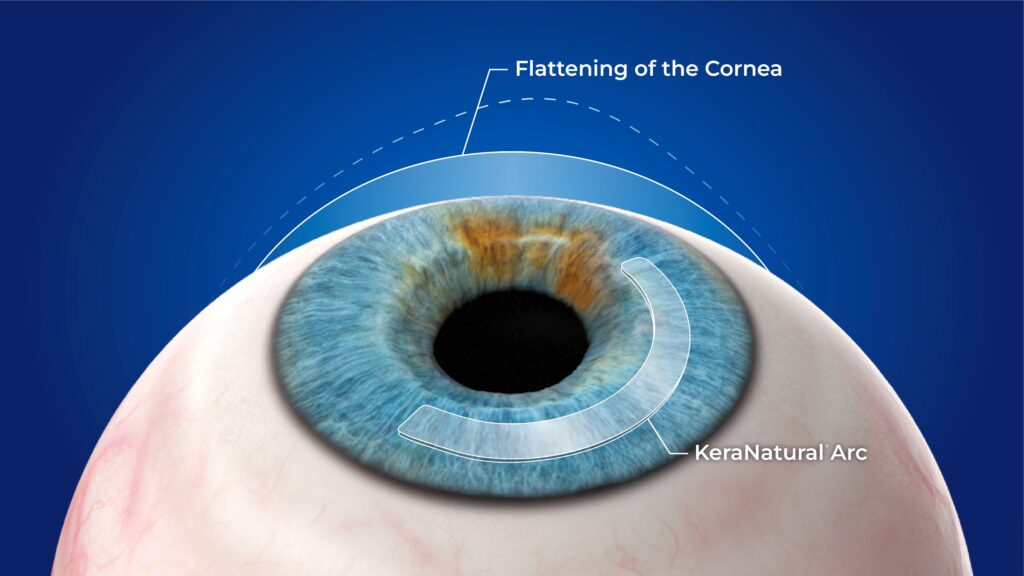
KeraNatural® is implanted into the corneal stroma to flatten and stabilize the cornea’s shape, improving visual acuity and potentially delaying or eliminating the need for more invasive procedures.
Implementing CAIRS in Your Program
In this video, corneal surgeon Dr. Jonathan Solomon shares his real-world experience using CAIRS (Corneal Allogenic Intrastromal Ring Segments) with KeraNatural®, including surgical insights, patient outcomes, and key considerations for adoption.
New: Read our featured interview with Dr. Jonathan Solomon on implementing CAIRS with KeraNatural®.
KeraNatural
What are the dimensions of the graft?
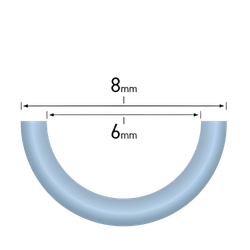
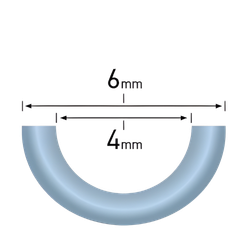
The graft has an approximate width of 1 mm and is available in either full-thickness or split-thickness corneal tissue. It is offered in two sizes – 6 mm and 8 mm, representing the diameter measured from tip to tip along the outer edge. Due to the soft and pliable nature of the tissue, surgeons may also consider the graft in terms of tissue volume when planning placement.
Which graft size should you use?
The primary difference between the 6 mm and 8 mm arc/ring is the tissue length. Selection typically depends on surgeon preference and the size of the patient’s cone. The 6 mm option provides a shorter segment, while the 8 mm option provides greater tissue length. Since the tissue can be trimmed intraoperatively, surgeons commonly modify either size before or after insertion to achieve the desired segment length.
Clinical Evidence for Biologic Alternatives to Synthetic Corneal Ring Segments
Peer-reviewed studies evaluating corneal allogenic intrastromal ring segments report encouraging outcomes for keratoconus management.
- Early CAIRS studies demonstrating improved visual acuity and corneal shape using donor-derived stromal segments. | View publication.
- Prospective study (62 eyes) demonstrating sustained improvements in visual acuity and corneal topography with follow-up extending up to three years. | View publication.
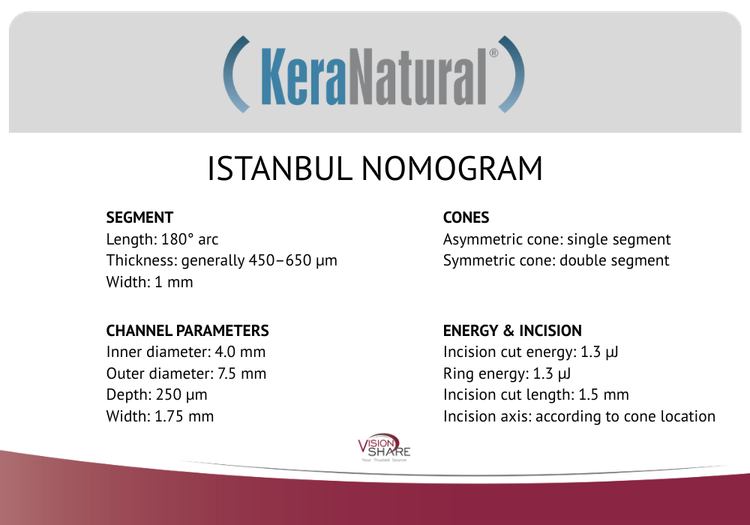
- Clinical series using the Istanbul Nomogram (44 eyes) reporting significant visual acuity improvement and reduced keratometric values with no major complications. | View publication.
Safety Considerations
Published clinical studies evaluating corneal allogenic ring segments report favorable safety outcomes, with low complication rates and no major adverse events reported in early clinical series. Biologic segments may offer advantages in biocompatibility compared with synthetic implants.
Implementing KeraNatural into your practice
If you are interested in performing the CAIRS procedure using KeraNatural, our team can help you get started. When you contact Vision Share, a member of our team will follow up to better understand your clinical interests and determine how we can best support your practice. The process typically includes:
Clinical Information and Training
We provide the clinical information needed to get started and will help coordinate training with experienced KeraNatural surgeons, including wet lab opportunities and case-based guidance to support adoption of CAIRS in your practice.
Surgical Planning
Our team provides surgical planning assistance for new surgeons who have signed up to implement the KeraNatural procedure in their practice. We facilitate the surgical planning with experienced KeraNatural surgeons who create and verify the plan, helping ensure you have the guidance and resources you need prior to surgery. View sample surgical plan.
Next Steps
Contact us to discuss tissue availability, surgical planning support, and the steps required to begin offering this procedure in your practice.
*A femtosecond laser is required to perform the CAIRS procedure.

Request Clinical Information
If you are evaluating CAIRS procedures, alternatives to PMMA Rings, or exploring sterile corneal allograft segments for your practice, our team is available to provide additional information. Please complete the form below to:
- Connect with our clinical coordination team
- Request clinical documentation
- Discuss tissue availability
- Explore international distribution options
Vision Share serves as a distributor for KeraNatural and holds exclusive distribution rights in select countries, with shared distribution arrangements in other regions.
For ophthalmic surgeons seeking additional clinical information about KeraNatural.
