
Clinical Insights for Surgeons Considering CAIRS
As corneal surgeons evaluate new treatment options for keratoconus, many are asking the same questions: Which patients are good candidates? How steep is the learning curve? How does CAIRS compare with traditional treatment options? In this conversation, Dr. Jonathan Solomon shares his experience implementing CAIRS (Corneal Allogenic Intrastromal Ring Segments) using KeraNatural®. Drawing on decades of experience performing corneal transplantation procedures, he explains why preserving the patient’s own cornea whenever possible has become an important part of his treatment philosophy. Watch the interview below or explore the key CAIRS clinical insights summarized on this page.
Watch the Interview
“In many respects, CAIRS offers the best of both worlds. It improves corneal geometry while preserving future flexibility for both the patient and the surgeon.”
Jonathan D. Solomon, MD, FWCRS, Medical Director,
Solomon Eye Physicians & Surgeons
Maryland, United States.
Key CAIRS Clinical Insights from the Interview
1. Preserving the Patient’s Cornea Whenever Possible
One of Dr. Solomon’s strongest messages is that while corneal transplantation remains an important treatment option, preserving a patient’s native cornea whenever possible is often in the patient’s best interest. He explains how CAIRS provides another option before considering more invasive procedures.
2. Why Did Dr. Solomon Choose to Adopt CAIRS?
Dr. Solomon describes following the development of CAIRS for years before it became available in the United States. What ultimately convinced him was the ability to improve corneal geometry through tissue addition rather than removing or permanently altering the patient’s cornea.
3. Reducing the Risk of Ring Extrusion
One of the primary reasons Dr. Solomon transitioned to KeraNatural® was the opportunity to eliminate concerns associated with synthetic ring extrusion. Using donor corneal tissue changes the risk profile and offers an alternative approach for appropriate patients.
4. How Easy Is It to Learn the Procedure?
Dr. Solomon explains that surgeons already familiar with intrastromal ring segments may find the transition to CAIRS relatively straightforward. He also encourages surgeons who are new to the technique to be patient while learning the procedure, emphasizing that it is well worth exploring.
5. Who Are Good Candidates for CAIRS?
Early in his experience, Dr. Solomon focused on patients with relatively stable keratoconus, often those over age 35 with inferior cones who were seeking geometric improvement. He discusses how careful patient selection contributed to successful adoption of the procedure.
6. Setting Realistic Expectations
Dr. Solomon stresses the importance of patient education before any surgical procedure. Rather than promising perfect vision, he explains how CAIRS can improve corneal shape while preserving future treatment flexibility.
7. Why CAIRS Offers Flexibility
One of the closing themes of the interview is flexibility. Dr. Solomon explains that CAIRS reshapes the cornea without removing tissue or permanently stiffening it, preserving future treatment options while helping improve vision.
Interview Transcript
Introduction
Dr. Jonathan Solomon: I am Dr. Jonathan Solomon, a cornea and refractive surgeon in the Washington, D.C., area at Solomon Eye Physicians and Surgeons. Throughout my career, I have performed penetrating keratoplasty (PKP), deep anterior lamellar keratoplasty (DALK), DSEK, DLEK, DMEK, and many other forms of corneal transplantation. There is absolutely a place for corneal transplantation, and it remains an important treatment option for patients who need it. However, I believe it is in both our best interest and, more importantly, the patient’s best interest to preserve the patient’s own cornea whenever possible.
“Preserving the patient’s own cornea whenever possible is in the patient’s best interest.”
Jonathan D. Solomon, MD, FWCRS, Medical Director,
Solomon Eye Physicians & Surgeons
Maryland, United States.
Preserving the Cornea
I first learned about KeraNatural® over the past 10 years through published literature, discussions with colleagues, and presentations at professional meetings. The procedure had been developed outside of the United States, and I followed its progress with great interest. When I learned it was becoming available here, I immediately wanted to incorporate it into my practice. The ability to improve the geometry of the cornea by adding tissue rather than removing tissue was incredibly appealing. Removing tissue is permanent. Preserving the patient’s cornea whenever possible offers significant long-term value, and that’s what KeraNatural® provides.
“The ability to improve the geometry of the cornea by adding tissue rather than removing tissue was incredibly appealing.“
Jonathan D. Solomon, MD, FWCRS, Medical Director,
Solomon Eye Physicians & Surgeons
Maryland, United States.
Why I Adopted CAIRS
The clinical factors that influenced my decision to adopt CAIRS centered around reducing the risks associated with the traditional treatment paradigm using synthetic intrastromal ring segments. Although complications with synthetic rings are uncommon, ring extrusion is a real concern. I had personally managed patients who experienced extrusion. With donor stromal tissue, that particular concern is essentially eliminated. The opportunity to use donor corneal tissue instead of synthetic implants significantly changed the risk profile and made CAIRS an extremely attractive option.
Learning the Procedure
The onboarding process for KeraNatural® was very similar to adopting any new surgical technology. The goal is to minimize variables and build confidence with familiar techniques and instrumentation. We learned that the tissue could be dehydrated ahead of surgery, and Vision Share provided instructional videos, instrumentation guidance, and educational support throughout the process. Combined with communication from experienced colleagues and our previous experience implanting intrastromal ring segments, the learning curve was surprisingly manageable.
If CAIRS is your first experience placing intrastromal ring segments, there is certainly some nuance to the procedure. Be patient with yourself as you develop experience. However, I believe it is a technique that is well worth exploring. For cornea surgeons who are considering CAIRS as an alternative to DALK or penetrating keratoplasty, I believe it is an excellent option to have available.
Choosing the First Patients
When selecting our first KeraNatural® patients, we focused on individuals who demonstrated relatively stable keratoconus. Typically, these were patients 35 years of age or older with inferior cones who were primarily seeking improvement in corneal geometry. Cross-linking was not necessarily required, but our focus was on selecting patients who would benefit most from geometric improvement of the cornea.
Managing Patient Expectations
Managing expectations is at the heart of good patient care. From the very beginning, patients should understand that this is not LASIK or a procedure designed to provide perfect, glasses-free vision. Patients are not necessarily expected to leave seeing 20/20 without correction. Many patients arrive believing that cross-linking or even corneal transplantation are their only treatment options. It is refreshing to be able to tell patients: “We have a treatment that allows you to keep your own cornea while improving your vision. Using a small laser-created channel, we can reshape your cornea without removing it or permanently stiffening it.” Patients appreciate having another option that preserves their own tissue whenever possible.
Why CAIRS Offers Flexibility
One of the greatest advantages of CAIRS is the flexibility it provides. The procedure reshapes the cornea without removing tissue and without permanently stiffening the cornea in a way that may limit future treatment options. In many respects, CAIRS offers the best of both worlds. It improves corneal geometry while preserving future flexibility for both the patient and the surgeon. That flexibility is something patients truly appreciate, and it is one of the qualities that makes KeraNatural® such an exciting advancement in the treatment of keratoconus.
Editor’s Note: This transcript has been lightly edited for readability while preserving the meaning and clinical insights shared by Dr. Jonathan Solomon.
Explore Additional KeraNatural Resources
Interested in learning more about KeraNatural® and CAIRS Clinical Insights? Explore additional educational CAIRS resources:
- Learn more about CAIRS procedure using KeraNatural®
- View a Sample KeraNatural® Surgical Plan
- Switching from Intacs to KeraNatural®
- Contact Vision Share about KeraNatural® Information
About Dr. Jonathan Solomon
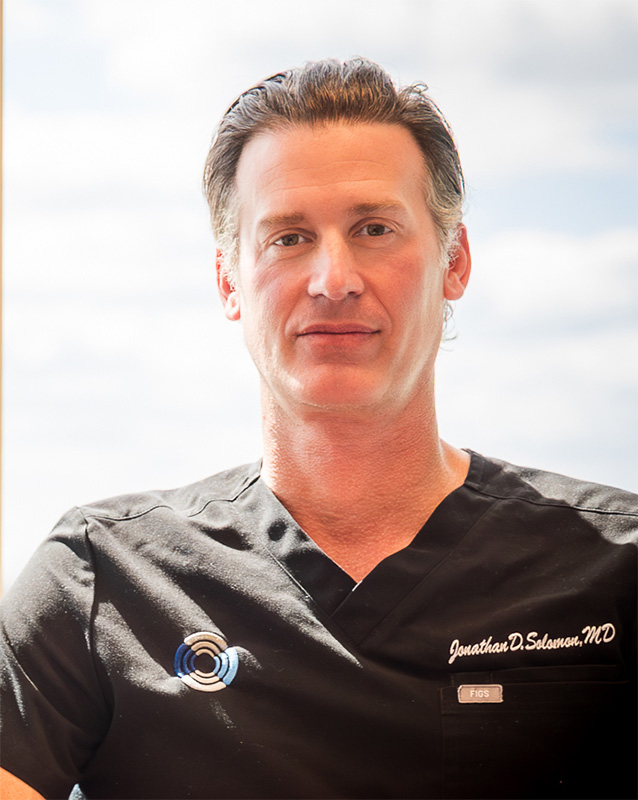
Dr. Jonathan Solomon is a cornea, cataract, and refractive surgeon at Solomon Eye Physicians & Surgeons in the Washington, D.C., area. Throughout his career, he has performed thousands of corneal procedures, including PKP, DALK, DMEK, DSEK, and other advanced corneal surgeries. In this interview, he shares his experience implementing CAIRS using KeraNatural®.
